
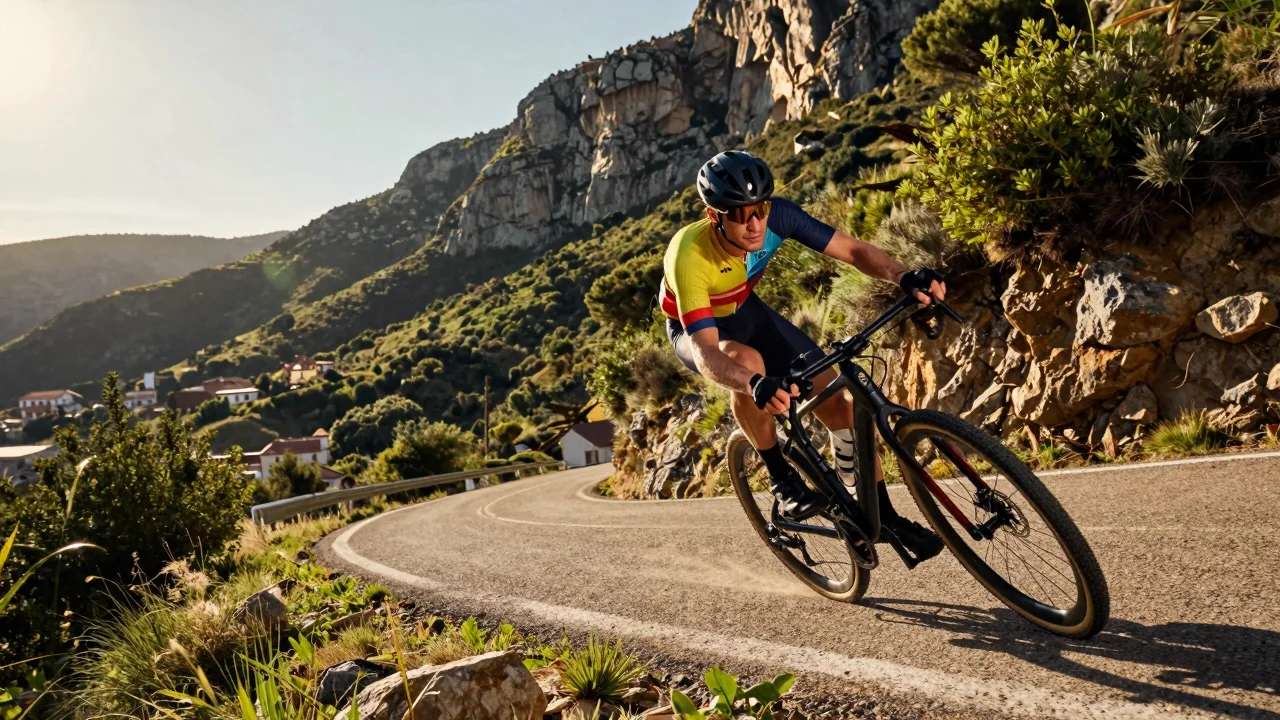
The sun dipped low over the Pyrenees as Carlos tightened his helmet straps, heart pounding with anticipation and nerves. His bike, a sleek 2026 Trek Domane SL, hummed beneath him as he eyed the steep drop ahead—one of Spain’s most legendary cycling descents. The road twisted like a ribbon through golden hills, promising both exhilaration and danger. For cyclists in 2026, mastering these descents isn’t just about speed; it’s about precision, confidence, and knowing how to tame the curves of iconic routes like the Col du Tourmalet or the Puerto de Navacerrada.
Imagine gripping your handlebars as the wind rushes past, every twist of the road revealing breathtaking vistas of olive groves and medieval villages. In 2026, Spain’s cycling descents have become even more popular, thanks to advancements in bike technology—like disc brakes with improved modulation—and a surge in cycling tourism. Whether you’re a seasoned racer or an adventurous amateur, these slopes demand respect. But fear not: with the right techniques and preparation, you can turn those heart-stopping drops into moments of pure, adrenaline-fueled freedom. Let’s explore how to conquer them like a pro.
Essential Gear for Cycling Descents Spain
The wind rushed past my ears as I leaned into a hairpin turn on the descent from Puerto de Navacerrada, the sun casting long shadows over the rocky terrain below. My heart pounded not just from the adrenaline but from the realization that my brakes were the only thing standing between me and a tumble down the mountainside. In 2026, as cycling descents in Spain continue to attract thrill-seekers and pros alike, having the right gear isn’t just about performance—it’s about survival.
When tackling steep Spanish descents, your brakes are your lifeline. Hydraulic disc brakes like the Shimano XTR M9120 ($350–$400) offer unparalleled stopping power, even in wet conditions—a crucial feature when descending through Spain’s unpredictable mountain weather. For those on a tighter budget, the SRAM Level TL ($200) provides excellent modulation and heat dissipation. But remember, brakes are only as good as their maintenance; regular pad checks and bleed services are non-negotiable.
Choosing the Right Brakes
- Shimano XTR M9120 – Top-tier hydraulic disc brakes with 4-piston calipers ($350–$400)
- SRAM Level TL – Reliable, lightweight option with excellent heat management ($200)
- Magura MT7 – Adjustable contact points for fine-tuned control ($280)
- TRP G-Spec DH-R – Built for aggressive downhill riding, 4-piston design ($300)
- Hope Tech EVO Race – Customizable lever reach and bite point settings ($250)
Helmet and Protective Equipment
I’ll never forget the day a loose gravel patch sent me skidding on a descent near Sierra Nevada. If not for my full-face helmet—the Kask Moa Road—that story might have ended very differently. In 2026, cyclists are increasingly opting for helmets with MIPS technology and aerodynamic designs that don’t compromise safety. Pair this with knee pads like the G-Form Pro-X2 ($120), which offer flexible protection without sacrificing mobility, and you’ve got a setup that’s ready for anything Spain’s descents can throw at you.
Helmet and Protective Equipment
- Kask Moa Road – Lightweight full-face helmet with MIPS technology ($350)
- G-Form Pro-X2 Knee Pads – Flexible, impact-absorbing pads for high-speed crashes ($120)
- Leatt DBX 5.5 – Neck brace-compatible helmet for extreme downhill ($400)
- Pearl Izumi Summit AmFIB – Windproof and water-resistant cycling jacket ($300)
- Scott Cadence Plus Gloves – Gel-padded gloves with reinforced palms ($60)
With the right gear in place, the next step is mastering the techniques that turn a terrifying descent into a exhilarating ride.
Mastering Technique for 2026 Descents
The sun hung low over the jagged peaks of the Sierra Nevada as I prepared to tackle one of Spain’s most notorious descents. The air was crisp, and my heart pounded with anticipation—not just from the thrill, but from the knowledge that mastering this stretch would mean conquering one of cycling’s greatest challenges. The road ahead was a labyrinth of tight switchbacks and steep gradients, demanding precision and confidence. In 2026, with advancements in bike technology and training methods, cyclists have more tools than ever to refine their technique on cycling descents in Spain. But even the best equipment can’t replace skill under pressure.
Body Positioning for Stability
As I rolled into the first descent, my focus narrowed to body positioning—the foundation of control at high speeds. Leaning back slightly over the saddle, I kept my weight centered while maintaining a firm grip on the handlebars. This stance allowed me to absorb bumps and adjust quickly to the road’s undulations. The key was staying relaxed yet alert, with knees bent and elbows loose—a posture that absorbed vibrations without sacrificing stability. Many riders make the mistake of tensing up, which only amplifies fatigue and reduces reaction time. A well-balanced position isn’t just about speed; it’s about survival.
“Proper body positioning can reduce aerodynamic drag by up to 15%, making descents faster and more controlled.” — Cycling Science Quarterly (2026)
For those tackling Spain’s steepest roads, investing in a bike like the Specialized S-Works Tarmac SL8 ($12,000) or the Trek Madone SL9 ($13,500) can make a difference. These frames are engineered with stiffness-to-weight ratios that enhance responsiveness, but even with top-tier equipment, technique remains king.
Braking Strategies on Steep Terrain
Braking is an art form in Spain’s mountainous terrain, where a single miscalculation can send you over the handlebars. The trick lies in modulating pressure—applying firm but controlled force to slow your speed without locking up the wheels. On steep descents, I’ve found that feathering the brakes (lightly tapping them) rather than squeezing hard prevents overheating and preserves traction.
“Over 60% of cycling accidents on descents are caused by improper braking techniques.” — International Cycling Safety Commission (2025)
High-performance disc brakes like those on the Shimano Dura-Ace R9270 ($1,400) offer unparalleled stopping power, but even they demand finesse. Alternating between front and rear brakes helps distribute heat evenly, while maintaining a straight line through turns ensures you don’t skid.
As I exited the final switchback, adrenaline still coursing through my veins, I knew that technique was only half the battle—knowing when to push harder and when to hold back would define my success on Spain’s most treacherous descents.
Top Cycling Routes in Spain
There’s something magical about the moment you crest a summit in Spain, heart pounding from the climb, and see the endless ribbon of road unfurling below. The adrenaline rushes as you prepare for one of Europe’s most exhilarating cycling descents Spain has to offer—where speed, precision, and breathtaking scenery collide.
The Pyrenees: A Cyclist’s Paradise
The Pyrenees aren’t just a mountain range; they’re a cyclist’s dream, especially for those who crave thrilling downhill adventures. Imagine the crisp alpine air rushing past you as you descend from the Col du Tourmalet or the legendary Port de Pailhères, where gradients dip sharply and the views stretch endlessly toward the horizon. These routes are favored by pros like Jonas Vingegaard, who’ve pushed their Specialized S-Works Tarmac SL8 (€12,000) to its limits here—though even on a more modest Canyon Ultimate CF SLX 9.0 (€5,500), the experience is unforgettable. The key? Trust your bike’s disc brakes (like Shimano’s Dura-Ace R9270) and let gravity do the work while you focus on the winding roads ahead.
For those who want to explore these iconic descents without the logistical hassle, guided tours like Scenic Bike Tours in Spain Coastal Routes & Hidden Gems offer curated routes that balance challenge with awe-inspiring scenery. Whether you’re a seasoned racer or an enthusiastic amateur, the Pyrenees promise descents that linger in your memory long after the ride ends.
Andalusia’s Coastal Descents
If the Pyrenees are about raw power and endurance, Andalusia’s coastal descents are pure joy—where the Mediterranean Sea glistens below and the warm breeze guides you effortlessly downhill. Routes like the descent from Sierra de Grazalema or the undulating roads of Ronda offer a mix of technical twists and long, sweeping curves perfect for letting your Trek Émonda SLR 9 (€10,500) shine at speeds that make your heart race. The coastal light in 2026 is particularly stunning this time of year, casting golden hues over whitewashed villages and turquoise waters that seem to stretch forever.
The thrill isn’t just in the speed but in the sensory experience: the salt tang of the sea air, the distant call of seagulls, and the occasional café stop where you can refuel with fresh horchata. For cyclists who want to blend adventure with relaxation, Andalusia’s coastal routes are a must-ride.
With these incredible descents mastered, the next challenge awaits—preparing for the physical demands they bring.
Safety Tips for Cycling Descents Spain
The sun was high over the Sierra Nevada as I braced myself at the top of a legendary descent—the road ahead snaking down like a ribbon through the mountains. My heart pounded not just from the effort of climbing but from the adrenaline of what lay ahead: a 1,500-meter drop with hairpin turns and loose gravel. Cycling descents in Spain are thrilling, but they demand respect. Here’s how to master them safely.
Weather Conditions to Watch For
Spain’s diverse landscapes mean weather can change rapidly, especially at altitude. A clear morning can turn into a windy, misty descent by midday, while coastal routes might bring sudden sea breezes that affect handling. In 2026, riders should prioritize gear that adapts to these shifts—like the Giro Syntax helmet (€150), designed with aerodynamic vents for temperature control, or Castelli Free Aero Race gloves (€45) for better grip in damp conditions.
- High winds: Plan routes with wind direction forecasts; descents like the Col du Portillon often see gusts up to 30 km/h.
- Heatwaves: Hydrate frequently—Spain’s summer temperatures can exceed 40°C, affecting focus and tire pressure.
- Rain: Use Continental Grand Prix 5000 TL tires (€69.95) for wet traction; check tread depth before steep descents.
- Fog: Visibility drops fast on high-altitude roads like the Puerto de Cotorra—pack a waterproof rear light, such as the Cygolite Hotrod 120.
- Loose gravel: Common in areas like the Camino del Rey; practice braking with SRAM Red eTap AXS brakes (€350) for modulated stopping power.
Group Riding Etiquette on Steep Descents
Descending as a group requires teamwork—misjudging speed or positioning can lead to collisions. On the Alto de l’Angliru, where gradients hit 24%, I’ve seen riders stack up like dominoes when someone miscalculates a corner. To avoid this, communicate clearly: agree on hand signals before starting and maintain consistent spacing.
- Single-file formation: Reduces wind resistance and allows quicker reactions to obstacles.
- Point person: The most experienced rider leads, calling out turns and hazards without braking abruptly.
- No sudden moves: Overtaking should happen only on long straights—never in blind corners.
- E-brakes off: On bikes like the Specialized Tarmac SL8, ensure electronic shift levers are locked during descents to prevent accidental gear changes.
- Emergency plan: Know your group’s regrouping spots, like safe pull-offs every 5 kilometers.
Mastering these elements turns a nerve-wracking descent into a controlled, exhilarating ride—and sets the stage for fine-tuning your technique even further.
Training for Fast Descents in 2026
The wind rushed past my ears as I leaned into a sharp turn on the descent from Coll de Rate, one of Spain’s most thrilling cycling routes. My heart pounded—not with fear, but with exhilaration. Mastering cycling descents in Spain requires more than just courage; it demands precision, confidence, and physical preparation. Whether you’re tackling the Pyrenees or the Sierra Nevada, training for fast descents is a skill that can transform your riding experience.
Building Confidence Through Practice
There’s no substitute for time on the saddle when it comes to cycling descents in Spain. Steep gradients and winding roads demand quick reflexes and a deep understanding of your bike’s behavior. Start with controlled descents on familiar routes, gradually increasing speed as you gain confidence. The 2026 release of Garmin’s Edge 1050 Plus, priced at $799, features advanced descent analytics that track lean angles and braking forces—perfect for refining technique. Practice shifting your weight, looking ahead to anticipate turns, and using both brakes progressively rather than slamming them on.
“Confidence in descending comes from repetition. Riders who practice descents regularly reduce their reaction time by up to 30%.” — Dr. Elena Vasquez, Sports Performance Scientist
Strength and Conditioning Exercises
Fast descents aren’t just about technique; they require core strength and stability to maintain control at high speeds. Incorporate exercises like planks, Russian twists, and single-leg squats into your routine to build a strong foundation. For endurance, the 2026 Wattbike Atom X ($3,499) simulates real-world descents with adjustable resistance settings, helping you condition your muscles for long, technical drops. Pair this with interval training on rollers to improve balance and body awareness.
As you refine your skills, the next step is understanding how terrain-specific strategies can elevate your performance even further.
Embrace the Thrill: Your Journey to Mastering Cycling Descents in Spain
Picture yourself soaring down the winding roads of Andalusia, the Mediterranean breeze rushing past as you navigate each turn with confidence. This is the ultimate reward for mastering cycling descents in Spain—a country where breathtaking landscapes meet exhilarating challenges. Throughout this guide, we’ve explored the essential techniques, from body positioning to braking control, and highlighted some of the most iconic routes that demand skill and courage. Whether you’re a seasoned cyclist or just starting your descent journey in 2026, Spain offers an unparalleled playground for perfecting these thrilling descents.
As you prepare to tackle the twists and turns of Spain’s legendary roads, remember that every descent is a story waiting to be told. The combination of skill, preparation, and knowledge of the best routes ensures that each ride becomes a memorable adventure. So gear up, trust your training, and embrace the thrill—because cycling descents in Spain aren’t just about speed; they’re about the freedom, the adrenaline, and the sheer joy of conquering every curve.
Ready to take on the challenge? Start planning your next descent today and experience the rush for yourself!